Why do some people seem to age faster than others, even when they take care of their skin?
It’s easy to assume the answer is genetics. Many patients look at their parents and expect their skin to follow the same trajectory. In the past, that was often true.
Today, it’s less predictable.
While genetics do influence how your skin behaves, they are no longer the main factor determining how it ages. With a better understanding of skin biology and the evolution of medical aesthetics, we now have the ability to influence aging in a much more meaningful way.
Table of Contents:
What actually causes skin aging?
Why you may age differently than your parents
What you can’t control vs what you can
From correction to regeneration
Treatments that influence how skin ages
- Collagen stimulation: rebuilding the skin’s foundation
- Regenerative therapies: enhancing how the skin repairs
- Cellular function: helping skin behave like younger skin
- Skin quality: improving the environment within the skin
What actually causes skin aging?
Skin aging is not one single process. It’s the result of structural changes happening within the skin, combined with how the skin responds to its environment over time.
At a biological level, aging begins with a gradual decline in collagen production. Fibroblasts, the cells responsible for producing collagen, become less active. The skin loses density, elasticity, and its ability to repair itself efficiently.
This is the baseline. It happens to everyone.
What differs is how that baseline shows up.
Over time, external stressors influence how quickly these changes become visible. This is why aging doesn’t look the same from person to person. It’s not just about how much collagen you lose, but how well your skin maintains itself along the way.
Is skin aging genetic?
Genetics determine your starting point, not your outcome.
They influence things like skin thickness, how reactive your skin is, and how your collagen production behaves early in life. But they do not dictate how your skin will look ten or twenty years from now.
What we see clinically is that two patients with similar genetic backgrounds can age very differently depending on how their skin has been supported over time.
That distinction is important, because it shifts the conversation from something fixed to something that can be influenced.
Why you may age differently than your parents
One of the most noticeable shifts in aesthetic medicine is generational.
Patients today often age differently than their parents did, and not because their genetics are different.
Previous generations did not have access to preventative care in the same way. Daily sunscreen use was less consistent. Medical-grade skincare was not widely used. Most importantly, treatments that support collagen and cellular function were not part of the conversation.
Now, we intervene earlier.
Instead of waiting for visible aging, we focus on maintaining skin quality before significant decline. Over time, this leads to skin that looks more stable, more consistent, and less defined by sudden changes.
What you can’t control vs what you can
There are elements of aging that are inevitable. Collagen will decline. Skin will change. That process cannot be stopped.
What can be influenced is how well the skin maintains its structure and function as that happens.
This is where modern aesthetic medicine has evolved. The focus is no longer on replacing what is lost, but on supporting the skin so that loss happens more slowly and more subtly.
From correction to regeneration
Historically, treatments were designed to correct visible signs of aging.
Today, the focus has shifted toward regeneration.
Rather than waiting for structural changes and trying to reverse them, we now work with the skin earlier, supporting the biological processes that keep it functioning well.
This approach is often referred to as prejuvenation, but at its core, it is about maintaining skin integrity over time.
Treatments that influence how skin ages
What defines modern aesthetic treatments is not just what they improve, but how they work.
The most impactful treatments today don’t simply change the surface of the skin. They influence how the skin functions, repairs, and maintains itself over time.
Collagen stimulation: rebuilding the skin’s foundation
As we age, the skin naturally slows down its ability to produce collagen. This is what leads to a gradual loss of firmness, structure, and elasticity.
Biostimulators are designed to reactivate this process.
They work by stimulating the cells in your skin that are responsible for producing collagen. Instead of creating an immediate change, they encourage your skin to gradually rebuild its own support system over time.
The result is skin that becomes:
- Firmer
- More resilient
- Better able to maintain its structure
Microneedling works in a different but complementary way.
By creating tiny, controlled micro-injuries in the skin, it triggers a natural repair response. As the skin heals, it produces more collagen and elastin, improving texture, elasticity, and overall skin quality.
Rather than adding something artificial, both approaches focus on helping your skin function more like it did when it was younger.
Regenerative therapies: enhancing how the skin repairs
Regenerative treatments take this a step further by improving how efficiently the skin heals and renews.
PDRN (often called VAMP) is a topical treatment made from DNA building blocks that help your skin repair itself. It’s applied to the skin, often after treatments like microneedling, so it can absorb more effectively. It works by calming inflammation and speeding up how quickly your skin renews, helping it heal and recover better. The result is smoother, stronger, and healthier-looking skin over time.
Exosomes act as signaling messengers between cells. They deliver instructions that help coordinate repair, enhance communication between cells, and optimize the healing process. Instead of simply triggering regeneration, they improve how well that regeneration happens.
These treatments are not creating change artificially. They are enhancing the skin’s natural ability to repair itself.
Cellular function: helping skin behave like younger skin
Aging is not only about structure. It is also about how skin cells function.
Over time, cells become slower, less efficient, and less responsive to damage.
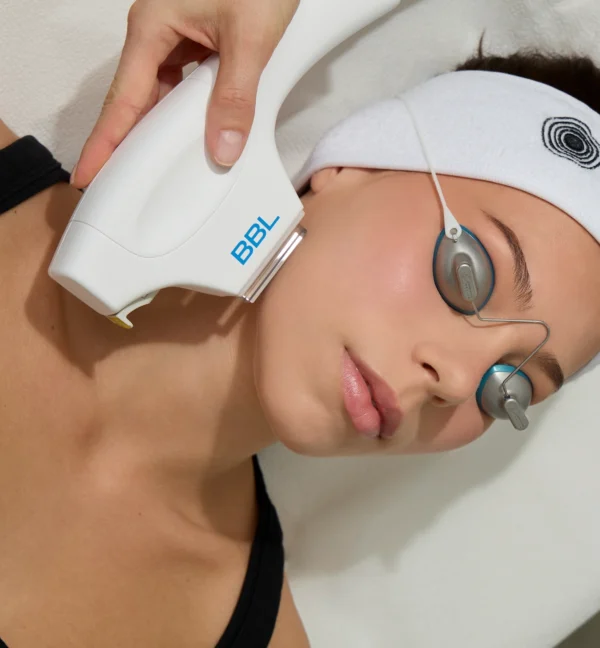
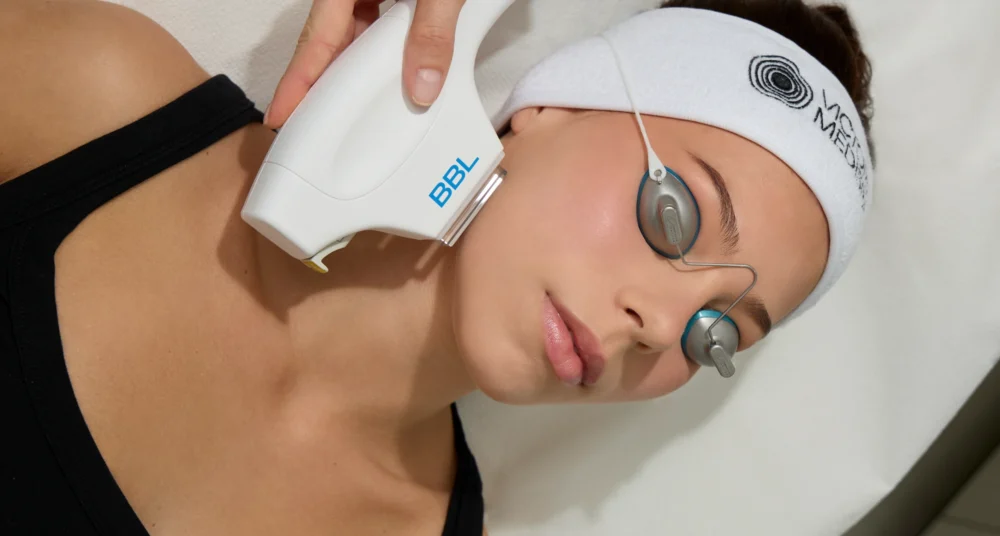
Broadband Light (BBL) works at this level.
In addition to improving pigmentation, it has been shown to influence gene expression in skin cells, encouraging them to behave more like younger cells. This leads to improvements not just in appearance, but in how the skin functions day to day.
Skin quality: improving the environment within the skin
Healthy skin depends on hydration, nutrient availability, and optimal cellular function. When this internal environment is supported, skin does not just look better. It functions better.
Skin boosters such as hyaluronic acid and NCTF are designed to work beneath the surface to improve overall skin quality. Hyaluronic acid skin boosters are injected to deliver deep, long lasting hydration and improve elasticity from within.
NCTF, a blend of hyaluronic acid, vitamins, amino acids, and antioxidants, can be delivered through injections or applied topically with microneedling. This supports cellular repair, improves microcirculation, and enhances the skin’s natural regenerative processes.
When the skin’s internal environment is supported, processes like inflammation, repair, and renewal begin to rebalance. Over time, this is reflected in a clearer, more even, and stable complexion.
People choose skin boosters not to change their features, but to restore skin that feels depleted, reactive, or lacking vitality. It is about improving the foundation so the skin can perform at its best.
A shift in how we approach aging
What connects all of these treatments is a shift in philosophy.
We are no longer limited to correcting visible changes after they happen.
We can now:
- Support collagen before significant loss
- Improve how skin repairs itself
- Influence how skin cells behave over time
This is what allows skin to age more gradually, more predictably, and more naturally.
When to consider treatment
There is no single point when treatment becomes necessary. It is usually a gradual shift.
Skin may begin to feel less resilient. Fine lines may linger. Overall quality may change in a way that is difficult to define but easy to notice.
This is often when patients begin to explore options, not to reverse aging entirely, but to support their skin in a more proactive way.
Conclusion
Genetics still matter, but they no longer define the outcome.
What has changed is our ability to influence how skin ages at a biological level. By supporting collagen, improving cellular function, and maintaining skin quality over time, we can change not just how skin looks, but how it behaves.
You cannot change your genetics.
But you can influence how your skin ages.
If you’re starting to notice changes in your skin, or simply want to take a more proactive approach, a personalized plan can make all the difference.
Book a consultation with one of our experts at Victoria Park Medispa to better understand your skin and explore the treatments best suited to support it, now and over time.
Own your extraordinary.