October is World Menopause Awareness Month, with World Menopause Day recognized on October 18. While menopause is often discussed in terms of hot flashes, sleep or changes to the menstrual cycle, hormonal changes can also have a noticeable effect on the skin.
During perimenopause and menopause, you may find that your skin feels drier or more sensitive, breakouts return after years without them, or changes in firmness and facial contours become more noticeable. These changes are common, and many can be traced, at least in part, to changing estrogen levels.
01The cause
Why Your Skin Changes During Menopause
Estrogen plays an important role in maintaining skin hydration, thickness, elasticity and collagen. As estrogen levels begin to fluctuate during perimenopause and eventually decline, the skin can gradually become drier, thinner and less resilient.
Collagen is particularly important. It is one of the proteins that gives skin its structure and firmness. Collagen production already declines naturally with age, but the hormonal changes associated with menopause can accelerate collagen loss.
This does not mean that every change you notice in your skin is caused by menopause. Genetics, sun exposure, lifestyle and the natural aging process continue to play significant roles. More often, these factors are happening at the same time, which is why changes can become more noticeable during this stage of life.
02What you may notice
Skin Changes You May Notice During Perimenopause and Menopause
Hormonal changes affect everyone differently. Some people notice only subtle differences in their skin, while others experience several changes in hydration, texture, firmness or hair growth.
Dryness, Itching and Increased Sensitivity
Dry, itchy skin is a common concern during perimenopause and menopause. As estrogen levels decline, the skin may produce less oil and retain less moisture, affecting its natural protective barrier. This can leave the skin feeling dry, tight, itchy or more sensitive than usual.
You may notice that your usual moisturizer no longer provides enough hydration, your skin feels tight after cleansing, or products you’ve used for years suddenly cause irritation.
These changes aren’t limited to the face. Dryness and itching can also affect the neck, chest, arms, hands and legs.
While moisturizing regularly and using gentle skincare products may help relieve dryness, persistent or severe itching should be discussed with a physician or dermatologist, particularly if it is accompanied by a rash or other symptoms.
Hormonal Acne and Breakouts
Breakouts can return during perimenopause and menopause, even if you haven’t experienced acne in years. As estrogen declines, changes in the balance of hormones can influence oil production, sometimes leading to breakouts around the chin, jawline and lower face.
Interestingly, acne and dryness can occur at the same time. Skin may become more sensitive while still being prone to clogged pores and blemishes, making some traditional acne treatments too irritating.
Persistent or painful breakouts should be evaluated by a healthcare professional to determine the most appropriate treatment.
Changes in Firmness, Fine Lines and Facial Contours
One of the more noticeable effects of menopause can be a change in the skin’s firmness and overall appearance. As collagen and elasticity decline, fine lines may become more pronounced, and the skin around the cheeks, jawline and neck may begin to appear less firm.
The face also changes beneath the skin as we age. Gradual changes in facial fat, muscle and bone can contribute to hollowing around the temples or cheeks, reduced facial volume and less definition along the jawline.
Together, these changes can subtly alter facial contours and contribute to a different overall appearance.
Changes in Facial Hair
Some people notice an increase in facial hair during or after menopause, particularly around the chin and upper lip.
This happens because declining estrogen levels can make the effects of androgens, a group of hormones involved in hair growth, more noticeable. As a result, some facial hairs may become darker or coarser.
A sudden or significant increase in facial or body hair should be discussed with a physician, as other hormonal or medical conditions may be involved.
When Skin Changes May Not Be Menopause
Although dryness and sensitivity are common during menopause, not every new skin concern is related to hormonal changes.
Skin rashes, for example, can have many causes, including eczema, allergic reactions, irritation from skincare products or infections. A new or persistent rash should not automatically be attributed to menopause.
If you experience a rash that is worsening, painful, spreading, blistering or accompanied by other symptoms, consult your physician or dermatologist for an appropriate diagnosis.
03Treatment options
Treating Skin Concerns During Menopause
There is no single aesthetic treatment for menopausal skin. The most appropriate approach depends on what has changed and what you would like to address.
For some people, dryness and changes in skin quality may be the most noticeable. For others, the priority may be loss of firmness, fine lines, pigmentation, changes in facial volume or unwanted hair.
Dryness and dehydrated skin
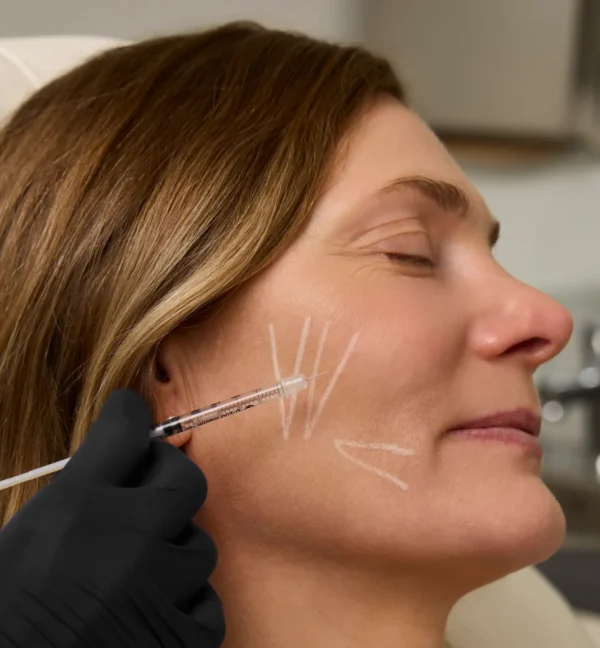
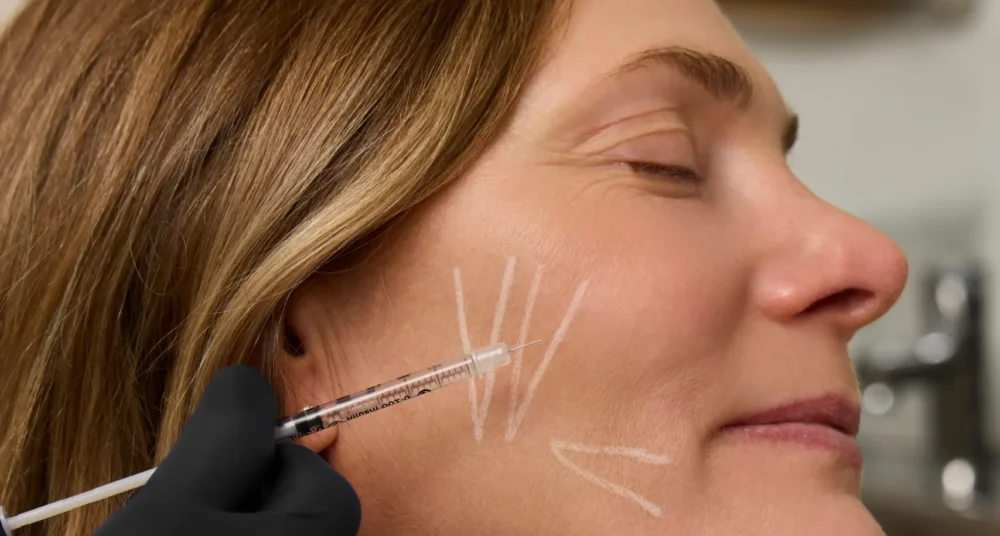
Skin Booster injections deliver hydrating ingredients such as hyaluronic acid directly into the skin. Rather than adding volume like a traditional dermal filler, they are used to improve hydration and overall skin quality. Different types of Skin Boosters are available, allowing the treatment to be selected based on the skin’s needs.
Certain biostimulator injections may also help improve skin quality and hydration. Biostimulators are injectable treatments that encourage the body to produce more of its own collagen over time. One type uses an ingredient called PLLA-SCA, which works gradually to support collagen production and improve the skin’s firmness and quality.
If itching is caused by very dry skin, improving hydration may help. Persistent or unexplained itching, however, should be assessed by a physician rather than treated as an aesthetic concern.
Loss of firmness and collagen
Treatments that encourage collagen production can help support skin that is becoming less firm. Biostimulator injections work gradually by encouraging the body to produce more of its own collagen. Ultherapy PRIME uses focused ultrasound energy beneath the skin to stimulate collagen and improve firmness, while RF microneedling combines very small needles with radiofrequency energy to stimulate collagen and improve skin quality.
Fine lines and uneven texture
Microneedling creates tiny, controlled injuries in the skin that trigger its natural healing response and stimulate collagen. RF microneedling adds radiofrequency energy for additional collagen stimulation. Laser resurfacing treatments work by renewing damaged layers of skin and can improve concerns such as fine lines, uneven texture and sun damage.
Pigmentation and redness
Hormonal changes are not responsible for every difference that becomes more noticeable around menopause. Years of sun exposure can also become increasingly visible as brown spots, uneven pigmentation or redness. BBL and IPL are light-based treatments that target unwanted pigment and redness, while different types of lasers may be recommended depending on the specific concern.
Changes in facial volume
The structures beneath the skin also change with age, which can contribute to hollowing, flatter cheeks or changes in facial contours. Dermal fillers are injectable gels that can be placed strategically to restore or rebalance volume in areas where it has been lost.
Unwanted facial hair
Laser hair removal uses light energy to target pigment within the hair follicle, gradually reducing hair growth over a series of treatments. It is most effective for certain combinations of hair colour and skin type, which can be assessed during a consultation.
04Your plan
A Personalized Approach to Changing Skin
Menopause is a normal stage of life, and changes to your skin during this time do not necessarily need to be treated. But if those changes are affecting how you feel about your skin, there are options.
The most effective approach begins by identifying what has actually changed. Hormonal shifts, collagen loss, sun exposure and the natural aging process can all contribute, and the right treatment will depend on your individual skin, anatomy and goals.
At Victoria Park Medispa, our experts can assess your skin, explain the options that may be appropriate and create a treatment plan based on what you would like to address.
Book a consultation at Victoria Park Medispa to explore a personalized approach to your skin.
Book your consultation
